For restaurants with limited washing space and moderate, intermittent tableware volume, a commercial undercounter dishwasher is usually the more practical choice. It occupies a compact workstation, can often be operated by one employee, and works well where racks arrive at manageable intervals.
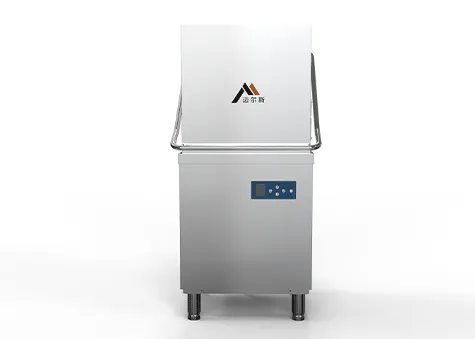
Restaurants facing concentrated lunch or dinner peaks should give stronger consideration to a commercial hood dishwasher. Its pass-through rack workflow allows dirty racks to enter from one side and clean racks to leave from the other, reducing repeated lifting and helping the dishwashing area maintain a more continuous flow.
The decision should therefore be based on peak rack demand, tableware mix, available working space, staffing, and utility conditions rather than restaurant size alone.
Hood-Type vs Undercounter Dishwasher: Quick Comparison
Although both machines perform commercial washing and sanitizing, they create very different operating workflows.
| Comparison | Undercounter Dishwasher | Commercial Hood Dishwasher |
|---|
| Loading method | Front-loading | Rack slides beneath lifting hood |
| Typical workflow | Load → wash → unload from same position | Pre-rinse → slide rack in → wash → slide rack out |
| Best suited to | Smaller restaurants, cafés, bars, secondary washing stations | Busy restaurants, hotels, catering kitchens and centralized wash areas |
| Space requirement | Compact machine footprint | Requires machine plus loading and unloading space |
| Operator movement | More bending and repeated door handling | Rack handling generally occurs around working height |
| Peak-volume capability | Better for moderate or intermittent demand | Better for repeated rack processing |
| Dirty/clean separation | Limited by workstation layout | Easier to organize into separate dirty and clean sides |
| Tableware flexibility | Plates, cups, glasses, cutlery and smaller items depending on model | Plates, bowls, trays, cutlery and larger commercial tableware |
| Expansion potential | Limited once rack demand rises significantly | Better suited to growing restaurant throughput |
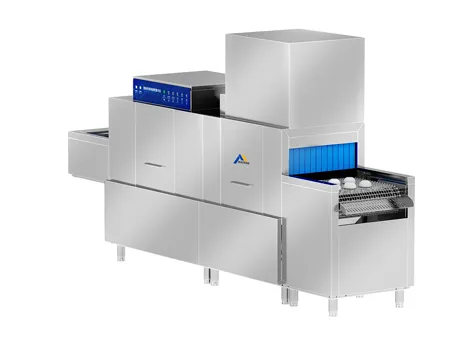
A pass through dishwasher is essentially designed around rack movement. Instead of returning every clean rack to the same loading point, operators can establish a one-direction process from scraping and pre-rinsing through washing and clean-tableware collection.
This workflow difference is often more important than the machine's external dimensions.
How Loading and Unloading Change Your Workflow
Why is a pass-through dishwasher faster in a busy kitchen?
The main advantage comes from material flow.
With an undercounter dishwasher, the operator normally opens the front door, pulls out or inserts a rack, closes the door, starts the cycle, waits, reopens the machine, removes the rack, and prepares the next load. The same working position handles both dirty and clean tableware.
That process can work efficiently when racks arrive gradually. During a concentrated service peak, however, employees may begin waiting for machine access while dirty racks accumulate nearby.
A pass through dishwasher creates a more linear sequence:
Dirty tableware → scraping → pre-rinsing → rack loading → washing → clean rack collection
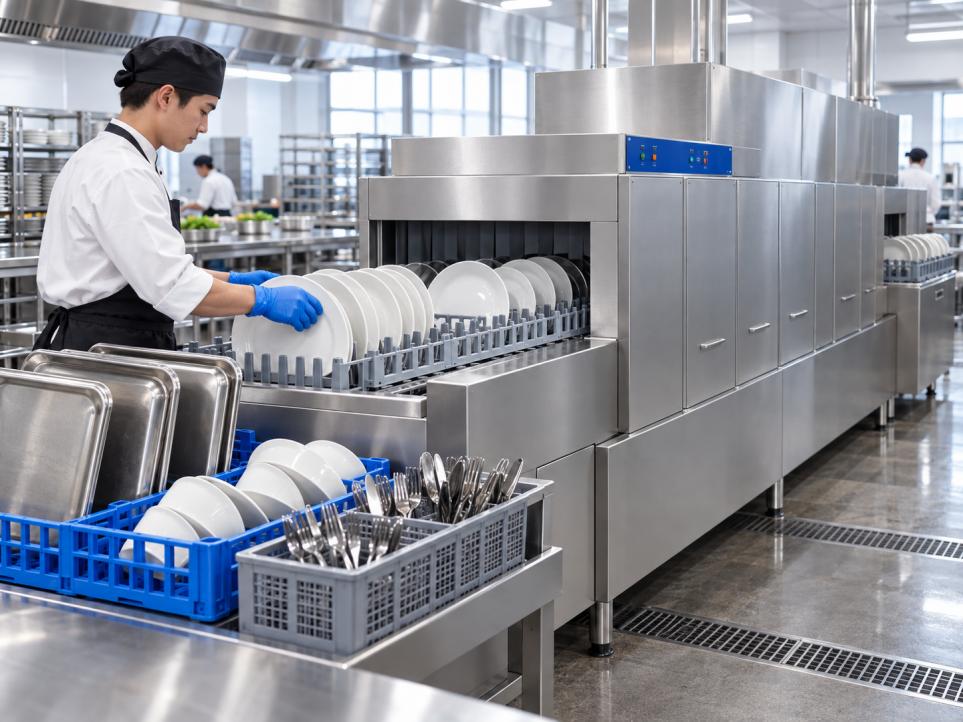
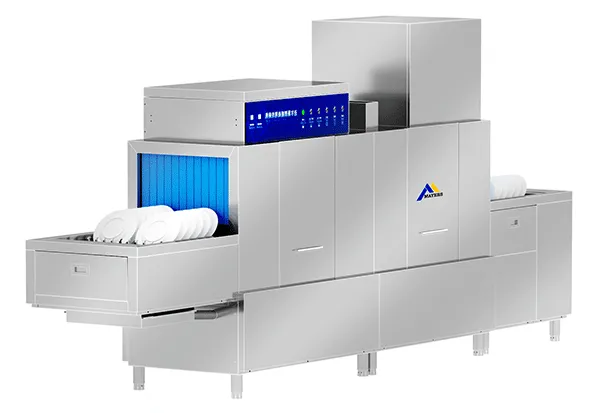
The rack can slide from an inlet table into the hood type dishwashing machine and then toward an outlet table after washing. Dirty and clean handling areas can therefore remain more clearly separated.
MAYERS hood-type equipment follows this rack-based operating principle, with the hood raised for loading and unloading and the machine configured for repeated commercial washing cycles.
Consider operator ergonomics during peak service
Throughput is partly an equipment issue and partly a labor issue.
Repeatedly loading a low front-opening machine requires more bending. This may be acceptable for a restaurant processing a limited number of racks per hour.
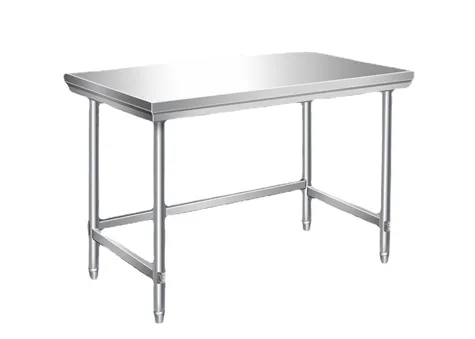
With a commercial hood dishwasher, racks can be moved across adjacent stainless-steel tables at a more convenient working height. During a two-hour dinner rush, reducing unnecessary lifting and repositioning can have a meaningful impact on practical throughput.
For this reason, restaurant owners should evaluate the complete dishwashing workflow rather than comparing wash-cycle specifications alone.
Compare the Complete Installation Footprint
One of the most common purchasing mistakes is comparing only machine width and depth.
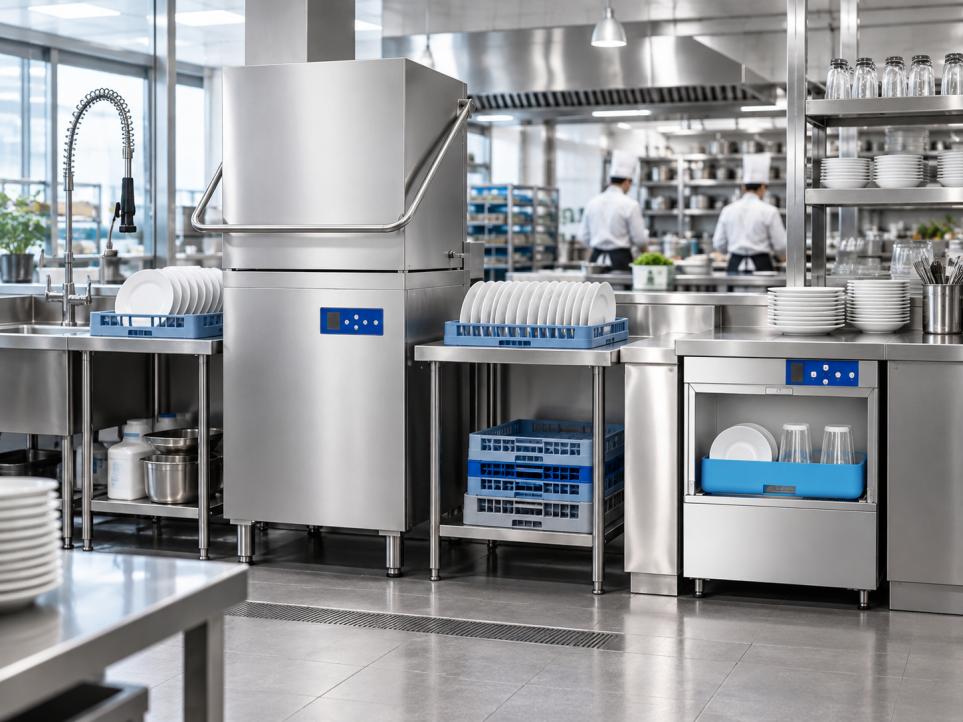
An undercounter dishwasher may fit underneath a counter, making it attractive where back-of-house floor space is restricted. MAYERS' current commercial undercounter model, for example, uses a compact 600 × 680 × 860 mm machine format.
A hood-type installation requires more planning.
The restaurant may need space for:
A scraping or pre-rinse area
An inlet table
The hood type dishwashing machine
An outlet or clean-dish table
Rack staging
Chemical storage
Drainage and utility access
Hood lifting clearance
How much space does a hood-type dishwasher really need?
The machine footprint is only one part of the answer.
Suppose the dishwasher body fits comfortably against the wall. If there is no room for dirty-rack staging on the inlet side, operators may still create congestion. Likewise, insufficient clean-side space forces employees to remove racks immediately after every cycle, reducing the benefit of the pass-through layout.
The correct measurement is therefore the total wash station:
dirty collection area + pre-rinse area + loading table + dishwasher + unloading table + operator circulation space
Vertical clearance also matters. A commercial hood dishwasher requires enough overhead space for the hood in its fully raised position, along with any local ventilation or exhaust arrangement required by the project.
When preparing the kitchen layout, send the supplier a floor plan rather than only the proposed machine opening.
Which Type Handles Your Peak Washing Demand?
Restaurant owners frequently compare dishwashers using daily dish count. Peak demand is a much better sizing metric.
A restaurant may wash 2,000 pieces of tableware during an entire day yet only experience moderate rack demand. Another restaurant may produce most of its dirty tableware during a 90-minute lunch service.
The second operation requires much greater instantaneous washing capacity.
How many racks per hour does your restaurant actually need?
Start by measuring a real peak period.
Record:
Number of covers served during the busiest hour.
Average plates, bowls, cups and cutlery pieces used per cover.
Number of items that fit safely in each rack.
Number of racks arriving at the washing area per hour.
Percentage of racks requiring longer wash cycles or additional pre-rinsing.
This gives a more useful figure than theoretical dish count.
An undercounter dishwasher can be highly effective when rack demand remains below the practical output of the workstation. It also works well when washing can be spread throughout the operating day.
A commercial hood dishwasher becomes more valuable when racks arrive continuously and the kitchen cannot afford a queue of dirty tableware during service.
For reference, MAYERS' MES-M2 hood-type model offers selectable 60-, 90- and 120-second programs and is specified for up to 60 baskets per hour under appropriate operating conditions.
Actual restaurant throughput will still depend on loading efficiency, soil level, pre-rinsing, rack preparation, staff availability and tableware type.
What if both machines have a similar rated rack capacity?
Then workflow becomes the deciding factor.
A specification sheet can show similar theoretical cycle times while real operating performance differs considerably.
With an undercounter dishwasher, each rack must be inserted and removed from the same front-loading position.
A pass through dishwasher allows the next prepared rack to wait on the dirty side while a clean rack moves toward the clean side. During sustained peak demand, that operating rhythm can produce a smoother washroom flow even when nominal machine specifications appear similar.
Installation, Operating Costs and Staff Requirements
The lowest machine price does not always produce the lowest operating cost.
Restaurant buyers should evaluate total installation and operating requirements.
Undercounter installation considerations
A commercial undercounter dishwasher generally offers a simpler layout because it can be integrated beneath an existing or planned counter.
The project should still confirm:
Electrical supply
Incoming water temperature and pressure
Drain position
Water treatment requirements
Detergent and rinse-aid dosing
Rack storage
Service access
Its compact layout may reduce the amount of stainless-steel tabling and floor space required.
Hood-type installation considerations
A hood type dishwashing machine normally needs a more complete washing station.
In addition to power, water and drainage, buyers should consider inlet and outlet tables, pre-rinse equipment, hood clearance, ventilation requirements and operator circulation.
The initial project cost can therefore be higher.
The return comes from workflow efficiency when the restaurant actually needs the additional handling capacity.
Which dishwasher needs more staff?
A smaller undercounter dishwasher can usually be incorporated into a workstation managed by one operator, especially outside peak service.
A commercial hood dishwasher can also be operated by one person under suitable conditions, although busy restaurants often achieve better output when tasks are divided. One employee may scrape, pre-rinse and rack dirty tableware while another handles clean racks and returns tableware to service.
There is no universal staffing number. The relevant question is whether your dishwashing system can keep pace with the kitchen without pulling employees away from food preparation or service duties.
Compare cost per usable rack, not simply cost per cycle
Water and electricity figures are useful, although they should be evaluated together with labor and throughput.
A machine that consumes slightly less energy per cycle may still be expensive operationally if employees spend substantially more time handling racks or if tableware shortages interrupt restaurant service.
For commercial operations, total cost should include:
equipment + installation + utilities + chemicals + labor + maintenance + downtime risk
That gives a far more realistic purchasing comparison.
When Should a Restaurant Upgrade to a Hood-Type Dishwasher?
A restaurant should consider moving from an undercounter dishwasher to a commercial hood dishwasher when its existing wash station regularly becomes a bottleneck.
Several operational signals deserve attention.
Dirty racks regularly queue during peak periods
A small backlog after a rush is normal. A continuous queue throughout lunch or dinner indicates that practical washing capacity is falling behind tableware generation.
Clean tableware cannot return to service quickly enough
If service staff regularly wait for plates, bowls or cutlery, the dishwasher is affecting front-of-house operations.
At this point, additional rack throughput may have direct commercial value.
Staff spend too much time bending, loading and unloading
When dishwashing volume increases, repetitive front-loading becomes a labor consideration.
A pass through dishwasher allows racks to move across the washing area in a more structured sequence.
Your restaurant has expanded seating or menu complexity
Capacity requirements change when restaurants add seats, private rooms, banquet service, buffet operations or menu categories requiring additional plates and bowls.
A machine that was correctly sized three years ago may be undersized after business expansion.
You need clearer dirty-to-clean separation
Foodservice projects with higher hygiene and operational requirements often benefit from a one-direction dishwashing area.
The hood type dishwashing machine fits naturally between dirty-side preparation and clean-side collection tables, making workflow zoning easier to plan.
When should you keep the undercounter machine?
Upgrading equipment purely because a larger machine is available rarely makes financial sense.
Keep the commercial undercounter dishwasher when it already handles peak rack demand comfortably, floor space is limited, labor flow remains efficient, and the restaurant does not regularly experience dirty-tableware backlogs.
An undercounter unit can also remain valuable as a secondary machine after a larger central dishwasher is installed—for example, in a bar, beverage station or separate service area.
What Information Should You Send a Supplier?
A professional dishwasher supplier should size the system around operating conditions rather than recommending equipment from restaurant seat count alone.
Before requesting a quotation, prepare the following information.
1. Peak washing demand
Provide estimated racks per hour during the busiest service period.
Where possible, include both normal and maximum demand.
2. Tableware photos and dimensions
Send photos of:
Dinner plates
Bowls
Cups and glasses
Serving trays
Cutlery
Kitchen utensils
Larger washable items
Include the maximum item height and diameter.
This helps the supplier confirm basket configuration and washing clearance.
3. Kitchen layout
Provide a drawing showing:
For a pass through dishwasher, indicate the preferred direction of rack movement.
4. Utility conditions
Confirm local:
These details can affect machine configuration and installation cost.
5. Operating schedule
Explain how many meal periods the restaurant serves and how long the busiest washing periods normally last.
A kitchen washing 30 racks gradually over six hours has a very different requirement from one processing the same quantity within 45 minutes.
6. Project and customization requirements
If the restaurant is part of a chain, hotel project or commercial kitchen contract, provide requirements for dimensions, controls, voltage, inlet/outlet tables, branding or OEM configuration.
MAYERS supplies both undercounter and hood-type commercial systems and supports configuration around different kitchen layouts, electrical standards and project requirements.
Conclusion
Choosing between a commercial undercounter dishwasher and a commercial hood dishwasher should begin with your busiest washing period.
Choose an undercounter dishwasher when space is limited, rack volume is moderate, and a compact front-loading workstation can keep tableware moving without creating delays.
Choose a hood type dishwashing machine when racks arrive continuously, your restaurant needs a defined dirty-to-clean workflow, or the existing washing station regularly struggles during peak service. A pass through dishwasher also offers a more scalable layout for restaurants expecting growth in covers, banquet activity or tableware volume.
Before ordering, calculate peak rack demand, measure the complete washing area, confirm utilities and send the supplier representative tableware photos and dimensions. Correct sizing at the project stage usually delivers more value than choosing equipment from maximum capacity figures alone.
FAQs
What is the difference between a hood-type and undercounter dishwasher?
An undercounter dishwasher uses front loading in a compact workstation. A commercial hood dishwasher uses rack-based pass-through loading and is better suited to sustained commercial washing.
Is a pass-through dishwasher the same as a hood-type dishwasher?
In most commercial kitchen applications, yes. A pass through dishwasher commonly refers to a rack machine with a lifting hood and separate loading and unloading sides.
Which dishwasher is better for a small restaurant?
A commercial undercounter dishwasher is often suitable when space is restricted and peak rack demand is moderate.
When does a restaurant need a hood-type dishwasher?
A hood type dishwashing machine becomes a strong option when dirty racks regularly accumulate during peak service or the restaurant needs faster rack movement.
Does a hood-type dishwasher require more space?
Yes. A commercial hood dishwasher requires space for the machine, raised hood, rack handling, and usually inlet and outlet worktables.
Can an undercounter dishwasher handle plates and bowls?
Yes. A commercial undercounter dishwasher can process suitable plates, bowls, cups, glasses and cutlery when the rack size and washing clearance match the tableware.
What should I provide before requesting a dishwasher quotation?
Provide peak rack demand, tableware dimensions and photos, kitchen layout, voltage, water conditions, drainage information and available installation space.
 English
 Español
 русский