Installing a commercial glasswashing machine is not only about placing the equipment under a counter and connecting utilities. Proper installation planning directly affects washing performance, operational efficiency, maintenance accessibility, and the overall workflow of a foodservice environment.
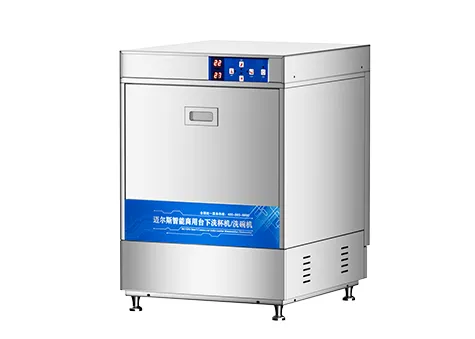
For cafés, bars, bubble tea shops, and small restaurants, space is often limited while glassware turnover remains high. An Undercounter Glasswasher provides a compact solution by combining a small footprint with rapid washing cycles and high-temperature sanitization. However, before purchasing, buyers need to evaluate installation space, water supply, drainage conditions, electrical requirements, and supporting work areas to avoid costly modifications later. MAYERS designs its undercounter glasswashing solutions for space-limited commercial environments, with customizable voltage, configuration, and installation requirements for different markets.
Why Installation Planning Matters Before Choosing an Undercounter Glasswasher
A commercial glasswasher should be considered as part of the complete washing workflow rather than as an isolated piece of equipment. Incorrect installation planning can affect cleaning results, increase maintenance difficulty, and create unnecessary interruptions during busy service periods.
Before delivery, operators should confirm whether the available counter space, utility connections, and surrounding work areas are suitable for the selected machine. Common installation problems include insufficient cabinet height, limited door-opening space, poor drainage planning, and unsuitable electrical connections.
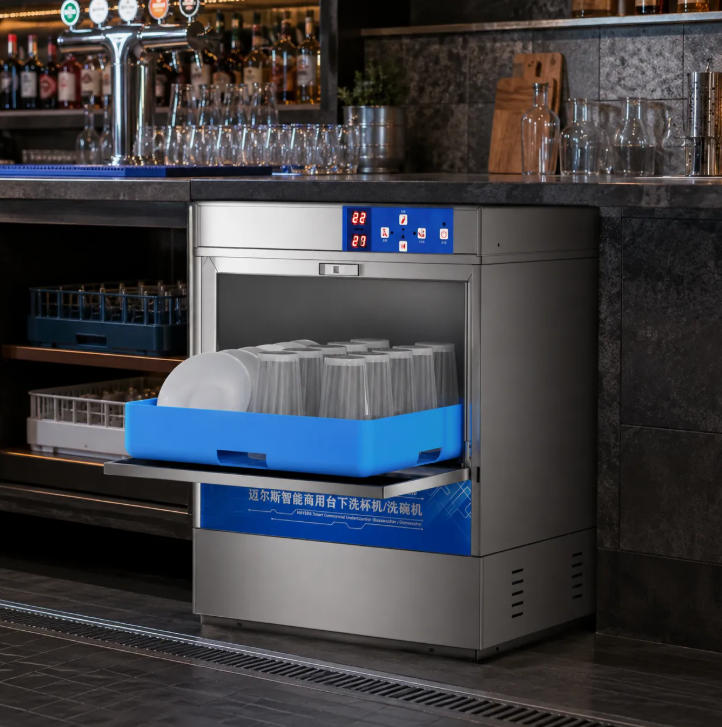
For beverage-focused businesses such as cafés, bars, and bubble tea shops, an Undercounter Glasswasher is often selected because it can fit directly beneath existing counters while keeping glass cleaning close to the service area. This reduces staff movement and helps maintain a smoother dirty-to-clean workflow. MAYERS positions its undercounter glasswasher as a compact commercial glass washing solution for environments where space efficiency and hygiene are equally important.
A well-planned installation area should consider not only the machine itself but also loading space, temporary glass storage, cleaning preparation, and operator movement. When these elements work together, businesses can improve washing efficiency without expanding the kitchen footprint.
Key Installation Requirements for an Undercounter Glasswasher
A successful installation depends on several technical conditions. Before placing an order, commercial kitchen planners should confirm the following factors.
Installation Space
The available counter opening should match the equipment dimensions, while additional space should be reserved for door operation, loading and unloading glassware, and future maintenance access. The machine position should allow operators to move smoothly between washing, preparation, and serving areas.
Water Supply
A stable water connection is essential for consistent cleaning performance. The installation should provide suitable inlet connections and follow the machine specifications regarding water temperature and pressure requirements. Proper planning helps maintain stable washing cycles during busy operating hours.
Drainage System
Drainage should be designed to support quick wastewater discharge and easy maintenance. Incorrect pipe positioning or insufficient drainage planning can lead to water accumulation, slow discharge, and operational problems.
Electrical Requirements
The power supply must match the equipment specifications and local electrical standards. Buyers should confirm voltage compatibility before installation and prepare a safe independent connection to ensure reliable operation.
Maintenance Clearance
Although an undercounter design saves valuable floor space, technicians still need sufficient access for inspection, cleaning, and servicing. Leaving proper clearance around the equipment can reduce downtime and simplify maintenance.
MAYERS supports different voltage and configuration requirements for commercial glasswashing projects, allowing equipment to adapt to different market standards and installation environments.
Undercounter Glasswasher Installation Space Comparison
| Installation Factor | Compact Café Setup | Restaurant Bar Setup | Small Commercial Kitchen Setup |
|---|
| Machine Position | Under counter | Bar counter area | Dedicated washing zone |
| Supporting Equipment | Small storage area | Stainless Steel Work Table | Work table + storage rack |
| Workflow | Manual loading | Continuous glass washing | Organized washing process |
| Space Priority | Maximum space saving | Faster operation | Better efficiency |
| Best Application | Cafés & beverage shops | Bars & restaurants | Small catering kitchens |
This comparison shows that installation planning depends on more than machine size. Daily glass volume, available workspace, operator habits, and future business expansion should all be considered before selecting the final layout.
For smaller beverage businesses, maximizing counter efficiency may be the priority. For restaurants and bars with higher glass turnover, adding preparation surfaces and organized storage areas can improve overall workflow.
How to Combine an Undercounter Glasswasher with a Better Washing Workflow
The position of a glasswasher within the kitchen or bar area directly affects staff efficiency. A well-designed washing station should follow a simple movement pattern: used glass collection, sorting, washing, drying, and clean glass storage.
Placing the machine close to the beverage preparation or service area reduces unnecessary staff movement. It also allows employees to quickly return clean glasses to operation during peak hours.
A Stainless Steel Work Table can further improve this workflow by providing a durable preparation and organization surface. It can support glass sorting, temporary placement, pre-cleaning preparation, and clean glass arrangement before service.
Compared with temporary counters or unsuitable surfaces, stainless steel equipment offers better durability, easier cleaning, and stronger compatibility with commercial kitchen environments. MAYERS provides stainless steel kitchen equipment and worktable solutions as part of complete commercial kitchen configurations.
Combining an undercounter glasswasher with properly positioned supporting equipment allows businesses to create a more organized washing station while making better use of limited space.
Why MAYERS Supports Complete Commercial Kitchen Equipment Solutions
Selecting the right glasswasher is only one part of designing an efficient commercial kitchen. Different businesses require different combinations of washing equipment, stainless steel products, and workflow layouts.
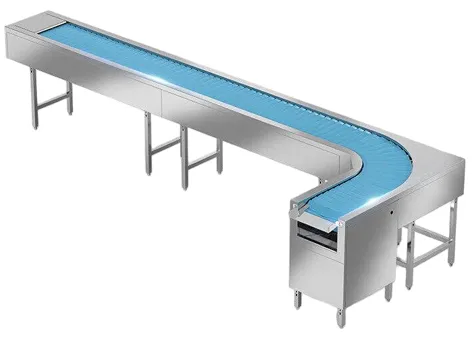
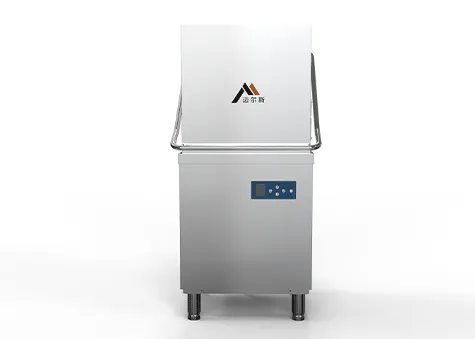
MAYERS provides commercial kitchen equipment solutions including Undercounter Glasswasher, Hood Type Dishwasher, Rack Conveyor Dishwashers, and stainless steel kitchen equipment. The company supports customized configurations for different project requirements, including equipment dimensions, voltage options, and functional adjustments.
Key capabilities include:
Commercial dishwasher manufacturing experience for different foodservice environments.
OEM and ODM customization support for distributors and project customers.
Stainless steel equipment integration for complete washing areas.
Project-based kitchen planning support according to space and workflow requirements.
Global supply capability with technical assistance throughout the equipment lifecycle.
MAYERS undercounter glasswashing solutions are designed for cafés, bars, bubble tea shops, and small restaurants where compact installation, fast cleaning cycles, and hygiene performance are essential. The machines feature compact structures, rapid washing cycles, and high-temperature sanitization up to 85°C, helping operators maintain consistent cleaning standards in demanding service environments.
By combining washing equipment with supporting stainless steel solutions, MAYERS helps customers build practical commercial kitchen layouts rather than simply supplying individual machines.
Frequently Asked Questions
How much space is needed for an Undercounter Glasswasher installation?
The required space depends on the machine model, counter dimensions, and maintenance access requirements.
Does an Undercounter Glasswasher need a dedicated water supply?
Yes. A stable water connection should be prepared according to the equipment specifications.
What drainage requirements should be considered?
Drainage should allow smooth wastewater discharge and provide convenient access for maintenance.
Can an Undercounter Glasswasher be installed under any counter?
No. Counter height, electrical supply, ventilation, and service clearance should be checked before installation.
Why is a Stainless Steel Work Table useful near a glasswasher?
It improves glass sorting, loading preparation, and clean glass organization.
How can MAYERS help with commercial glasswasher projects?
MAYERS provides equipment customization, technical support, and complete commercial kitchen solutions for different applications.
 English
 Español
 русский