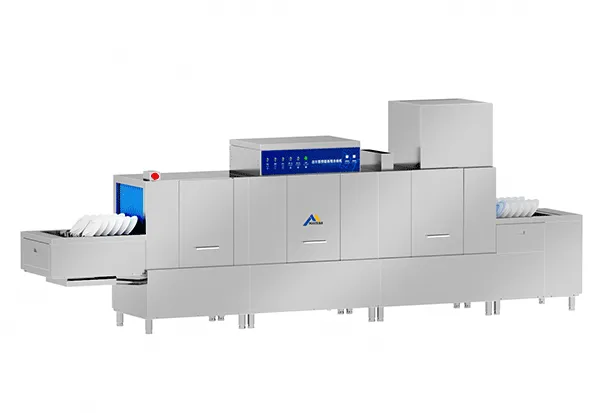
Choosing the right commercial dishwasher is an important decision for restaurants, hotels, catering facilities, and institutional kitchens. The wrong equipment choice can increase labor costs, reduce kitchen efficiency, and create workflow problems during peak service periods.
Among professional warewashing solutions, Hood Type Dishwasher and Rack Conveyor Dishwashers are two common options for medium and high-volume kitchens. While both are designed to improve cleaning efficiency and hygiene standards, they serve different operational needs.
Understanding the differences between capacity, installation space, workflow design, and long-term operating costs helps kitchen planners select the most suitable solution for their business.
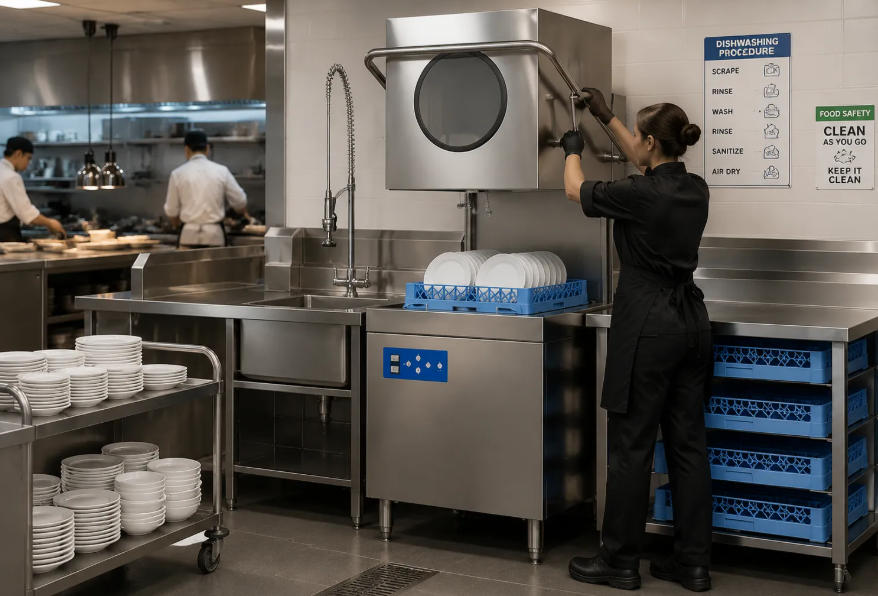
Why Compare Hood Type Dishwasher and Rack Conveyor Dishwashers?
Commercial kitchens have different dishwashing requirements depending on daily volume, available space, and service patterns. A small hotel kitchen may need a flexible machine that balances efficiency and investment, while a central kitchen may require continuous high-volume washing capability.
A Hood Type Dishwasher is typically designed for medium-capacity professional kitchens that require fast washing cycles, compact installation, and reliable sanitation performance. It allows operators to load dish racks, close the hood, and complete washing within a short cycle, making it suitable for restaurants, hotels, cafeterias, and similar foodservice environments.
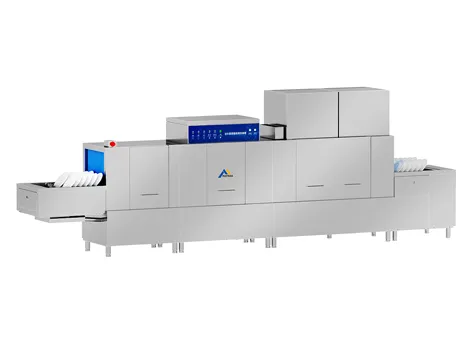
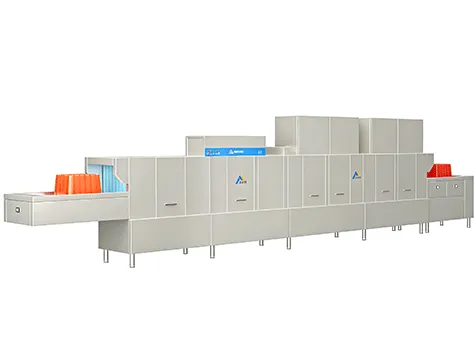
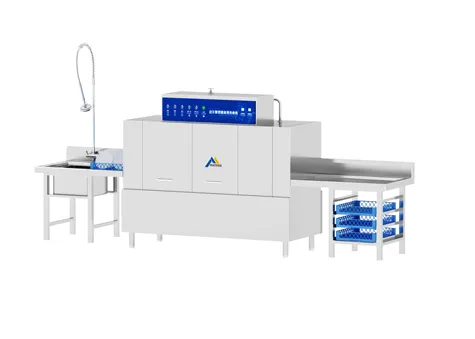
By comparison, Rack Conveyor Dishwashers are developed for operations with continuous dishwashing demands. They are often used in large facilities where a constant flow of tableware needs to be processed throughout the day.
The best choice depends not only on washing capacity but also on kitchen layout, labor availability, future expansion plans, and overall workflow design.
Hood Type Dishwasher vs Rack Conveyor Dishwashers: Key Differences
When evaluating commercial dishwashing equipment, buyers should consider several practical factors rather than focusing only on maximum capacity.
Washing capacity
Hood-type machines are suitable for medium-volume operations, while Rack Conveyor Dishwashers are designed for larger kitchens requiring continuous processing.
Workflow efficiency
Hood-type models support batch washing with simple loading and unloading, while conveyor systems create a continuous workflow for high-volume operations.
Labor requirements
Both systems reduce manual washing work, but conveyor solutions generally provide greater automation for large facilities.
Installation space
Hood-type machines usually require less space and can fit into more compact kitchen layouts. Conveyor systems need more dedicated installation areas.
Water and energy consumption
Efficiency depends on operating patterns, machine configuration, and daily usage frequency.
Initial investment
Hood-type solutions usually provide a lower entry cost, while conveyor systems require higher investment due to their larger scale and automation features.
Hood Type Dishwasher vs Rack Conveyor Dishwasher Comparison
The following comparison helps buyers evaluate which solution matches their kitchen requirements.
| Feature | Hood Type Dishwasher | Rack Conveyor Dishwasher |
|---|
| Recommended Output | Medium-volume kitchens | High-volume kitchens |
| Typical Capacity | Up to 60 baskets/hour | Continuous rack processing |
| Kitchen Size | Restaurants, hotels, cafés | Central kitchens, hospitals, universities |
| Installation Space | Compact | Larger footprint |
| Labor Requirement | Medium | Lower for continuous operation |
| Initial Investment | Lower | Higher |
| Scalability | Moderate | Excellent |
A Hood Type Dishwasher can process up to 60 baskets per hour with selectable 60/90/120-second washing cycles, making it suitable for busy restaurants and hotels that need fast turnover without requiring a full conveyor system.
For large-scale foodservice operations where dish volume remains consistently high throughout the day, conveyor solutions may provide better scalability.
When Should You Choose a Hood Type Dishwasher Instead?
A Hood Type Dishwasher is often the better choice when a kitchen needs professional cleaning performance but does not require a fully automated conveyor line.
Restaurants, hotels, school cafeterias, and commercial kitchens with limited installation space can benefit from this type of machine because it provides efficient washing while maintaining a relatively compact footprint.
Compared with smaller machines such as an Undercounter Glasswasher, hood-type models offer higher productivity and are better suited for operations handling larger quantities of plates, trays, bowls, and cookware.
For example, MAYERS hood-type solutions feature 304 stainless steel spray arms, 360° washing coverage, intelligent temperature control, automatic hood operation, and high-temperature rinsing systems designed to support consistent cleaning performance in professional kitchens.
Another advantage is operational flexibility. Kitchens with changing workloads can adjust washing cycles according to tableware conditions, helping maintain efficiency during both regular and peak service periods.
Why MAYERS Provides the Right Warewashing Solution for Every Kitchen
Selecting commercial dishwashing equipment requires more than choosing the largest machine available. The ideal solution should match the kitchen workflow, space conditions, and future business development plans.
MAYERS provides a complete range of commercial warewashing solutions to support different foodservice environments.
Key advantages include:
Complete commercial dishwasher product portfolio covering hood-type machines, conveyor systems, glass washers, and other professional cleaning equipment.
OEM and private label manufacturing capabilities to support distributors and commercial kitchen equipment brands.
Customized configurations including voltage options, machine specifications, and project-based requirements.
Engineering support for kitchen projects to help customers select suitable equipment layouts.
Stable production capability for reliable supply and long-term cooperation.
Global technical support to assist customers with installation and maintenance needs.
With experience in commercial kitchen solutions, MAYERS focuses on helping customers select equipment based on actual operational requirements instead of simply choosing the highest-capacity machine.
Frequently Asked Questions
What is the difference between a Hood Type Dishwasher and a Rack Conveyor Dishwasher?
A Hood Type Dishwasher uses batch washing cycles, while a conveyor dishwasher provides continuous rack processing for larger operations.
How many dishes can a Hood Type Dishwasher wash per hour?
Some commercial hood-type models can process up to 60 baskets per hour depending on the washing cycle and configuration.
Which commercial kitchens should choose Rack Conveyor Dishwashers?
They are suitable for large kitchens such as central catering facilities, hospitals, and universities with high daily dish volumes.
Is a Hood Type Dishwasher suitable for hotels and restaurants?
Yes. It is commonly used in restaurants, hotels, cafeterias, and other medium-volume foodservice environments.
When should I consider an Undercounter Glasswasher instead?
Undercounter models are better for smaller operations such as cafés, bars, and areas mainly washing glassware.
How do I choose the right commercial dishwasher for my kitchen expansion?
Consider daily dish volume, available space, labor requirements, workflow, and future growth plans before selecting equipment.
 English
 Español
 русский