Grand Continental Hotel required a commercial warewashing system capable of supporting the demanding rhythm of a luxury hospitality operation. Unlike a standalone restaurant, a hotel may receive used tableware from several service points, including guest dining areas, banquet operations, beverage service and back-of-house food preparation.
Mayers approached the project as a workflow integration task rather than a single-machine installation. The proposed system connected tableware return, sorting and pre-rinse positions with continuous rack conveyor washing and an organized clean-side handling area. Supporting equipment was arranged to help different washing tasks operate with less interference.
Project objective: create a more structured high-volume warewashing process that supports rapid tableware turnover, consistent hotel hygiene expectations and practical daily operation.
Project Background
Hotel warewashing demand changes throughout the day. Breakfast service creates a fast return of cups, saucers and plates; restaurant and room-service operations add mixed tableware; banquet clearing may create a concentrated peak after an event. The washing room must absorb these changes without allowing the return area, sorting tables or machine inlet to become the bottleneck.
For the Grand Continental Hotel project, the equipment configuration and layout needed to support continuous processing while maintaining clear working positions for waste removal, pre-rinse, rack loading, machine operation and clean-item discharge.
Application Profile
Luxury hotel and hospitality operation
High-volume guest tableware washing
Variable loads across normal and peak periods
Need for coordinated equipment and workflow
Core Project Priorities
Continuous rack-based processing
Organized dirty-side preparation
Reduced cross-traffic around the machine
Clear clean-side discharge and handling
The Warewashing Challenges
1. Concentrated Tableware Return
Hotel tableware does not return at a constant rate. When a restaurant service or banquet event ends, plates, bowls, cutlery and serving items can arrive in a short period. A machine with suitable capacity still underperforms when the return, scraping and loading positions are not designed for the same peak.
2. Different Items Require Different Handling
Glassware, general guest tableware and heavy kitchen utensils have different soil levels, handling risks and washing requirements. Mixing all items into one queue can slow the overall process and make working positions more difficult to manage.
3. Dirty and Clean Routes Must Remain Clear
Used items entering the washing area should not cross the clean tableware route. The layout therefore needed to create a logical sequence from return and sorting to pre-rinse, washing, clean discharge and redistribution.
4. The System Had to Work as One Line
The rack conveyor dishwasher, sinks, work tables and transfer positions needed compatible heights, directions and connection points. Treating each item as an isolated purchase would have increased unnecessary handling between stages.
Mayers Integrated Warewashing Solution
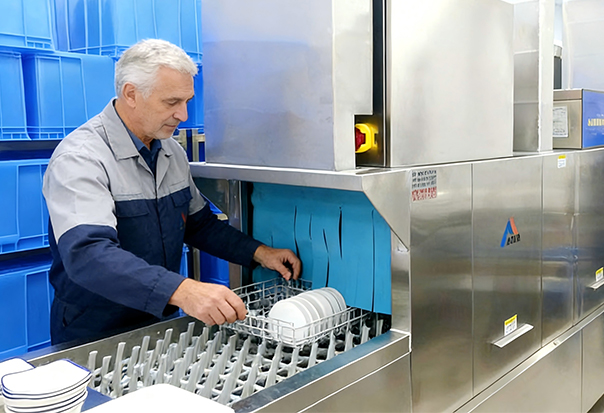
Mayers configured the hotel solution around a continuous rack conveyor dishwasher as the main tableware washing unit. The machine was supported by dirty-side preparation positions and clean-side handling equipment so the complete route could operate as a coordinated process.
Rack Conveyor Dishwasher as the Main Washing System
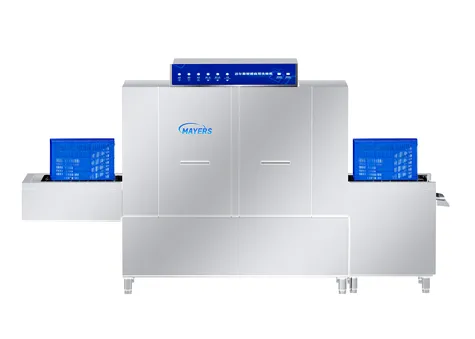
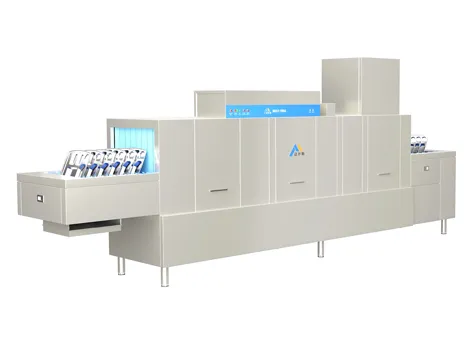
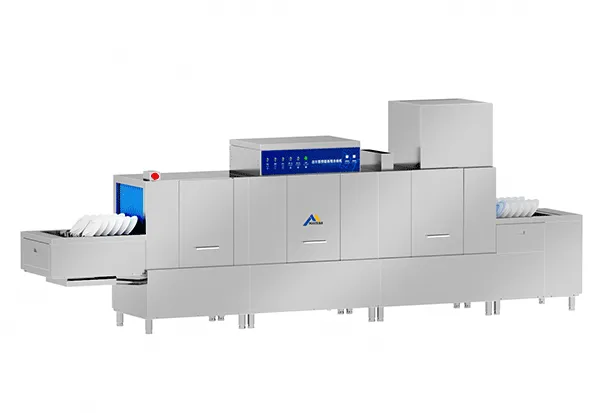
The rack conveyor dishwasher provides continuous rack-based processing for plates, bowls, cutlery and other hotel tableware. It is suited to operations where loaded racks must move through the washing process without the repeated opening and closing of a batch machine.
Dirty-Side Sorting and Pre-Rinse
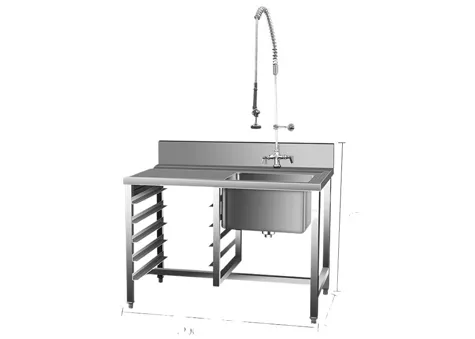
Stainless steel work surfaces and sink positions create defined areas for waste removal, sorting, pre-rinsing and rack loading. This preparation protects the main washing process from becoming the first point where staff attempt to organize mixed tableware.
Separate Support for Other Washing Tasks
Where required, a hotel system can include an undercounter glasswasher for beverage-service glassware and a hood type dishwasher or ultrasonic washing area for selected kitchen utensils and heavier items. This separation helps the main conveyor line remain focused on high-volume guest tableware.
Tray Return and Tableware Transfer
A tray return conveyor or customized transfer section can help organize movement from the service area into sorting and pre-rinse positions. The final connection design depends on the hotel layout and the distance between guest-facing return points and the washing room.
“The value of the project is not only the dishwasher capacity. It is the way every position—from return and sorting to clean discharge—supports the same peak workflow.”
Project Integration and Installation Considerations
Before manufacturing and installation, the hotel project should confirm machine orientation, rack flow direction, water and drainage points, electrical requirements, ventilation, floor loading, delivery access and maintenance clearance. In an existing hotel, these constraints can determine whether a standard layout is practical or whether customized stainless steel connections are needed.
Dirty-Side Design
Return space, waste handling, sorting table length, sink position, pre-rinse access and rack storage should be sized for the busiest clearing period.
Clean-Side Design
Discharge tables, rack unloading, inspection, temporary storage and the route back to hotel outlets should remain separate from incoming used items.
Qualitative Project Outcomes
Without verified operating measurements, the project should be presented through observable workflow outcomes rather than unsupported percentage claims. The integrated concept was designed to deliver the following improvements:
Without verified operating measurements, the project should be presented through observable workflow outcomes rather than unsupported percentage claims. The integrated concept was designed to deliver the following improvements:
More Structured Return FlowUsed tableware moves through defined preparation and washing stages.
Better Task SeparationGlassware, high-volume guest tableware and heavier kitchen items can follow suitable routes.
Stable Peak OperationThe rack conveyor system supports continuous processing during demanding hotel service periods.
Reduced Cross-TrafficDirty-side and clean-side positions are planned as separate operating zones.
Clearer Staff PositionsSorting, loading, unloading and redistribution tasks have defined working areas.
Project-Specific IntegrationEquipment connections can be adapted to the available site and utility conditions.
Why Leading Hotels Choose Mayers for Their Warewashing Solutions
With years of experience in luxury and high-volume hospitality projects, Mayers understands that a successful hotel warewashing system is more than just a dishwasher — it is a complete, well-integrated workflow designed around your daily operational reality.
Mayers delivers reliable, efficient, and hotel-specific solutions that reduce labor, save water and energy, and ensure consistent hygiene standards even during the most demanding peaks.
Ready to elevate your hotel's back-of-house efficiency?
Contact our hospitality team today for a professional site evaluation and tailored warewashing solution.
 English
 Español
 русский