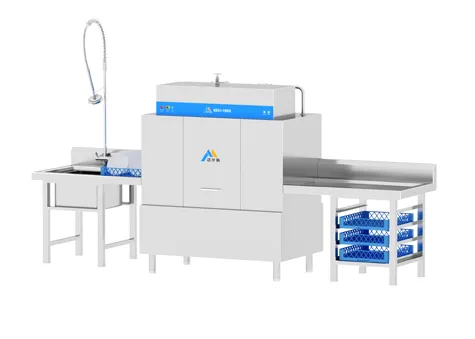
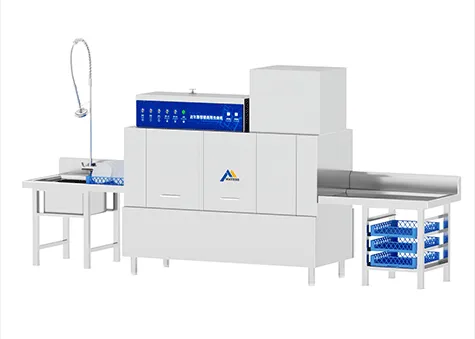
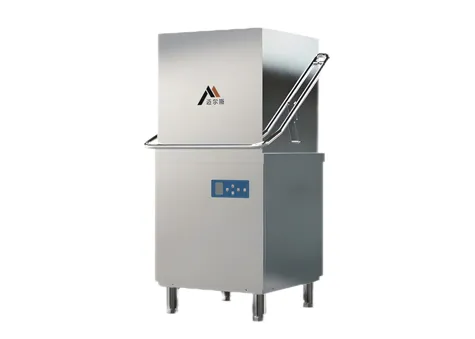
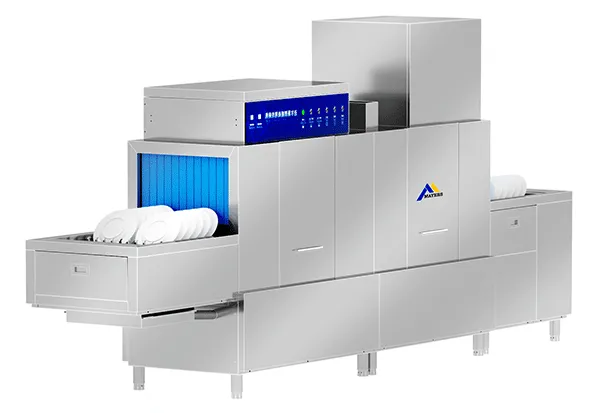
For high-volume foodservice operations—such as central kitchens, bustling hospitals, massive airline catering facilities, and sprawling university cafeterias—the flight type dishwasher is the undisputed workhorse of the back-of-house. Engineered to process thousands of dishes per hour on a continuous peg-belt conveyor, this massive industrial machine keeps the entire culinary workflow moving.However, because these machines operate under continuous, heavy loads, they require rigorous, structured care. When a flight type dishwasher fails, it is rarely a minor inconvenience; it is a full-scale operational crisis. Understanding how to properly maintain a flight type dishwasher is critical to protecting your investment, ensuring compliance with strict health codes, and keeping your kitchen running without interruption.This comprehensive guide will walk you through daily, weekly, and monthly maintenance procedures, common mistakes to avoid, and how to recognize when your machine needs immediate professional service.
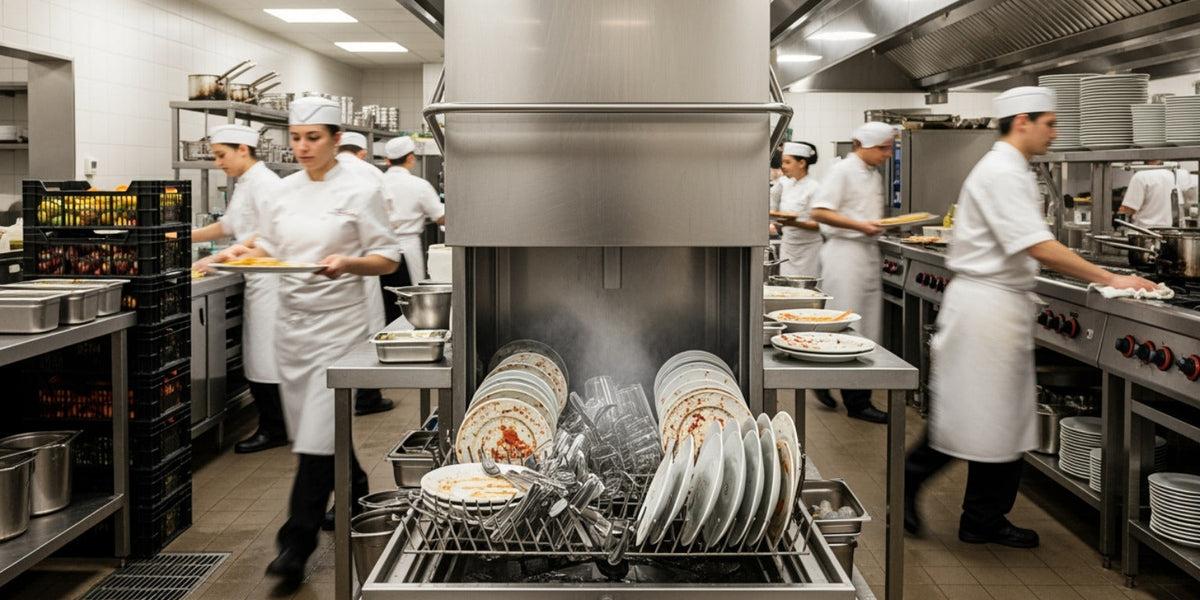
Why Proper Maintenance Matters for Flight Type Dishwashers
In the world of B2B foodservice and commercial kitchen management, maintenance directly equals cost savings. A flight type dishwasher is a high-load, continuous-operation piece of equipment. It consumes massive amounts of electricity to heat water, thousands of gallons of water per shift, and expensive commercial chemicals.When maintenance protocols are ignored, the machine's efficiency plummets. A poorly maintained flight type dishwasher can increase water and energy consumption by 20–40% over time as scale buildup forces heating elements to work harder and clogged nozzles require dishes to be washed multiple times.The consequences of poor maintenance include:
Declining cleaning performance: Leading to dirty, greasy plates and rejected health inspections.
Severe energy and water waste: Scaling and leaks drive up utility bills exponentially.
Hygiene risks: Standing dirty water breeds bacteria and mold inside the wash tanks.
Unexpected downtime: A broken conveyor belt during a lunch rush halts the entire kitchen.
Expensive emergency repairs: Replacing a burned-out 3HP motor costs drastically more than routine cleaning.
Conversely, strict preventive maintenance can significantly extend the service life of commercial warewashing equipment, maximizing the return on investment (ROI) and keeping operational costs predictable.
Daily Flight Type Dishwasher Maintenance Checklist
Daily maintenance is the first line of defense against mechanical failure and poor sanitation. Because these machines recirculate wash water to save energy, managing the amount of food debris that enters the machine is critical. Google and industry experts heavily favor structured, step-by-step checklists for daily operations.
Remove Food Debris Before Washing
A flight type dishwasher is not a garbage disposal. Proper pre-scraping and pre-rinsing are essential. If large chunks of food, bones, or heavy starches enter the machine, they will quickly clog the internal scrap filters and put immense strain on the high-pressure wash pumps. By effectively removing heavy food soil before loading the belt, you dramatically improve the wash water cleanliness, ensuring that the machine uses its chemical power to sanitize rather than dissolve bulk waste.
Clean Filters and Scrap Trays After Every Shift
The internal scrap trays and filters are designed to catch whatever food debris makes it past the pre-rinse stage. If these are not emptied regularly, the food soil will begin to rot in the hot water, leading to severe odor issues, bacterial growth, and sanitation compliance failures. Furthermore, overflowing trays will allow debris to bypass the filter and block the main drain valves. Shift Maintenance Schedule:
| Maintenance Item | Frequency | Purpose |
| Scrap tray cleaning | Every shift (or every 2 hours during peak) | Prevent pump clogging and overflow |
| Filter screen cleaning | Daily | Maintain maximum water circulation |
| Drain inspection | Daily | Prevent standing dirty water |
Inspect Wash Arms and Rinse Nozzles
The spray arms deliver the mechanical force needed to clean the dishes. Inspect them daily for nozzle blockages. Small pieces of plastic wrap, toothpicks, or hardened food can easily block the spray nozzles, leading to uneven cleaning and "blind spots" where dishes receive no water.
Drain and Clean the Interior
At the end of the day, the machine must be completely drained. Grease accumulation, bacteria growth, and early-stage scale formation thrive in dark, wet, warm environments. Use a hose to spray down the interior walls, ensuring all food particles are flushed down the drain. Professional Advice: Never leave dirty water inside the machine overnight. Always leave the large inspection doors wide open after cleaning to allow the massive wash chambers to air dry.
Check Water Temperature and Chemical Levels
A flight type dishwasher relies on precise thermal and chemical balance. If temperatures are too low, grease will not melt and dishes will not be sanitized. Check the temperature gauges frequently during operation.Standard Temperature Requirements:
| Function | Recommended Temperature |
| Wash Cycle | 150°F–160°F |
| Final Rinse (Sanitizing) | 180°F–195°F |
Additionally, ensure that the detergent dosing pumps are pulling chemicals correctly, the rinse aid calibration is accurate, and the sanitizer concentration (if using a low-temp chemical machine, which is rare for flight types) meets local health department standards.
Weekly Maintenance Tasks for Flight Type Dishwashers
While daily cleaning handles food debris, weekly maintenance is designed to handle the inevitable buildup of minerals and mechanical wear.
Delime the Dishwasher to Prevent Mineral Build-Up
If your facility has hard water, lime scale will rapidly build up on the internal walls, spray arms, and critically, the heating elements. Scale acts as an insulator; when it coats a heating element, the machine has to consume far more electricity to heat the water, leading to massive heating efficiency loss and eventual element burnout. Follow the manufacturer's instructions to run a weekly deliming (descaling) acid cycle to dissolve these minerals.
Inspect Conveyor Belts and Curtains
The flight type machine utilizes heavy PVC splash curtains to separate the pre-wash, wash, and rinse zones. If these curtains become worn, curled, or torn, hot water will splash between zones. This destroys the temperature balance, ruins heat retention, and causes massive water splash control issues outside the machine. Inspect these curtains weekly and replace them if damaged. Also, visually inspect the peg-belt conveyor alignment to ensure the chain is tracking straight.
Check Pumps and Motors for Unusual Noise
Listen to your machine. Early signs of mechanical failure usually present as sound. If you hear loud grinding, excessive vibration, or whining, a motor bearing may be failing or a pump may be partially obstructed. Early diagnosis helps avoid costly, catastrophic downtime during peak operation hours.
Monthly Preventive Maintenance for Commercial Dishrooms
Monthly maintenance shifts from simple cleaning to light technical inspections. This is where high-level commercial kitchen operators separate themselves from the rest.
Inspect Electrical Connections and Sensors
The intense heat and vibration of a flight type dishwasher can cause wiring to loosen over time. Inspect all visible electrical connections (ensure the power is off at the breaker first). Furthermore, ensure that the water level sensors and temperature probes inside the tanks are wiped completely clean of grease so they can provide accurate readings to the control board.
Verify Water Pressure and Flow Rate
Low water pressure severely affects cleaning performance and causes rinse cycles to fail. Conversely, pressure that is too high causes overspray issues, pushing water out of the machine and wasting immense amounts of water and energy. Check your facility's pressure regulator gauges.Troubleshooting Maintenance Issues:
| Problem | Possible Cause | Maintenance Solution |
| Poor cleaning / Low pressure | Clogged lines or weak pump | Clean lines, check booster pump |
| Excess water usage / Leaks | Worn O-rings or leaking valves | Inspect and replace rubber seals |
| Slow or jerky conveyor speed | Motor wear or loose drive chain | Inspect drive system and tension |
Schedule Professional Preventive Maintenance
At least quarterly (and ideally monthly for massive 24/7 operations), schedule an inspection with a certified technician. They will test amp draws on motors, check for microscopic leaks, and replace worn parts using OEM (Original Equipment Manufacturer) spare parts.
Common Flight Type Dishwasher Maintenance Mistakes
Even with good intentions, many operations inadvertently damage their equipment. Most operational issues stem directly from staff misuse.
Using the Wrong Detergent
Never use domestic dish soap or unapproved chemicals in a commercial flight machine. It will cause massive foam overflows that choke the wash pumps, ruin the water pressure, and leave a heavy chemical film on all wares.
Ignoring Hard Water Problems
Failing to install a water softener or skipping the deliming process will destroy a machine from the inside out within a few years, leading to burned-out heaters and clogged pipes.
Overloading the Conveyor
While flight machines have high capacities, stacking plates on top of each other (nesting) or throwing large sheet pans over smaller bowls blocks the water spray paths. The water cannot physically reach the soiled surfaces, requiring entire loads to be rewashed.
Skipping Operator Training
The most advanced, expensive dishwasher in the world is useless if the staff doesn't know how to run it. High turnover in the dish pit means training is often skipped. Comprehensive training on pre-scraping, correct loading, and daily teardown is the most important maintenance step of all.
Signs Your Flight Type Dishwasher Needs Immediate Service
If routine maintenance is no longer keeping the machine running smoothly, it is time to call for professional backup. Ignoring these warning signs will lead to total equipment failure.Signs include:
Dishes consistently remain dirty or greasy after washing.
Severe water temperature fluctuations (failing to reach 180°F in the rinse zone).
Frequent conveyor belt jams or jerky movements.
Excessive steam leakage from the entrance and exit hoods.
Strange, loud pump noises (grinding or squealing).
Unexplained, consistently high utility bills (water or electric).
Water constantly pooling on the floor beneath the machine.
If these problems continue after routine maintenance, it may be time to contact a professional commercial dishwasher manufacturer or service provider immediately.
How Preventive Maintenance Reduces Operating Costs
In the B2B sector, ROI is everything. Maintaining a flight type dishwasher is not just a chore; it is a financial strategy.By keeping the machine descaled and clean, the heating elements operate efficiently, leading to significantly lower utility usage. Routine inspections catch small wear-and-tear issues before they become catastrophic, resulting in vastly lower repair costs. A well-maintained machine simply lasts longer, extending the equipment lifespan and delaying massive capital replacement expenditures.Furthermore, when the machine cleans perfectly on the first pass, you eliminate the labor costs associated with rewashing dishes, and you guarantee better sanitation compliance, protecting your brand's reputation.The Business Value of Maintenance:
| Benefit | Business Impact |
| Reduced downtime | More stable, uninterrupted kitchen operations |
| Lower utility usage | Reduced monthly electricity and water costs |
| Longer machine lifespan | Drastically better Return on Investment (ROI) |
| Better cleaning performance | Improved customer satisfaction and health compliance |
Choosing a Reliable Flight Type Dishwasher Manufacturer Matters
Maintenance costs are directly tied to how the equipment was originally designed. When it is time to upgrade or purchase new equipment for a facility, choosing the right manufacturer makes all the difference.An excellent flight type dishwasher features an easy-clean structure, large removable filters, and accessible wash arms. It will incorporate intelligent diagnostics on the control panel to alert staff of issues, energy-saving systems like heat recovery, and feature a durable stainless steel construction with a modular maintenance design that allows technicians to access internal components quickly.This is exactly why global B2B buyers look to industry leaders for their warewashing solutions. Modern commercial dishwasher solutions should combine energy efficiency, easy maintenance, and intelligent controls to improve long-term operational performance.
Why Global Distributors and Commercial Kitchens Choose Mayers
When massive foodservice operations require uninterrupted reliability, heavy-duty construction, and seamless maintenance, they partner with Mayers.
About Mayers
Mayers Intelligent Catering Equipment (Shenzhen) Co., LTD. is a premier professional manufacturer specializing in commercial dishwashing equipment and intelligent kitchen solutions since 2012.Backed by 13 years of extensive manufacturing and R&D experience, Mayers proudly serves global distributors, luxury hotels, major hospitals, central kitchens, schools, airlines, and massive foodservice operations in more than 150 countries.
One-Stop OEM & Customization Services
Mayers understands that a flight type dishwasher is a major infrastructural integration. We provide comprehensive OEM private labeling and project-based manufacturing to ensure the equipment fits perfectly into your operation or distribution portfolio.
Customized voltage and electrical configurations to meet any international standard.
Adjustable machine dimensions and module layouts to fit specific dishroom footprints.
OEM branding and private labeling for ambitious global distributors.
Premium stainless steel customization for unparalleled durability.
Layout-based dishroom solutions designed specifically for high-efficiency workflows.
Full After-Sales Technical Support
We build machines designed for easy maintenance, and we back them up with world-class support. Mayers provides dedicated installation guidance, remote troubleshooting, rapid spare parts support, comprehensive maintenance guidance, and distributor training.Full after-sales technical support is always available, letting global distributors and contractors sell with complete peace of mind.
Explore Mayers Commercial Dishwashing Solutions
From boutique cafés to massive airline catering facilities, Mayers manufactures the perfect cleaning solution:
| Product Category | Ideal Applications |
| Undercounter Glasswasher | Bars, cafés, small restaurants |
| Hood Type Dishwasher | Standard restaurants, boutique hotels |
| Rack Conveyor Dishwasher | Medium to high-volume kitchens |
| Flight Type Dishwashers | Airlines, hospitals, central kitchens, large universities |
| Commercial Fruit and Vegetable Washer | Food processing facilities, large caterers |
| Commercial Ultrasonic Dishwasher | Heavy-duty pot and pan cleaning |
| Plastic Crate Washer | Logistics centers and food factories |
| Stainless Steel Work Table | Commercial prep and dish sorting areas |
| Tray Return Conveyor | Cafeterias and high-volume canteens |
| Customization Services | Dedicated OEM/ODM projects |
FAQ About Flight Type Dishwasher Maintenance
How often should a flight type dishwasher be cleaned?
The internal scrap filters, spray arms, and wash tanks must be cleaned completely every single day (and often multiple times per shift during high-volume periods) to prevent clogged pumps, foul odors, and severe sanitation risks.
What temperature should a commercial flight dishwasher operate at?
For standard high-temp sanitization, the main wash cycle should operate between 150°F and 160°F to break down heavy grease, while the final rinse stage must hit a minimum of 180°F to 195°F to ensure proper thermal sanitization and rapid flash drying.
How do you remove limescale from a flight type dishwasher?
You must run a specialized commercial deliming (descaling) acid through the machine on a weekly or monthly basis, depending on your facility's water hardness. This safely dissolves the mineral buildup off the heating elements and internal walls without damaging the stainless steel.
Why is my flight type dishwasher leaving dishes dirty?
The most common culprits for dirty dishes are clogged spray arm nozzles, incorrect wash temperatures (failing to melt grease), overloading the conveyor belt so water cannot reach the dishes, or failing to pre-scrap heavy food debris before loading.
How long does a flight type dishwasher last?
When subjected to strict, daily cleaning protocols and regular professional preventive maintenance, a high-quality commercial flight type dishwasher can operate efficiently for 10–15 years or longer, providing an exceptional long-term return on investment.
 English
 Español
 русский