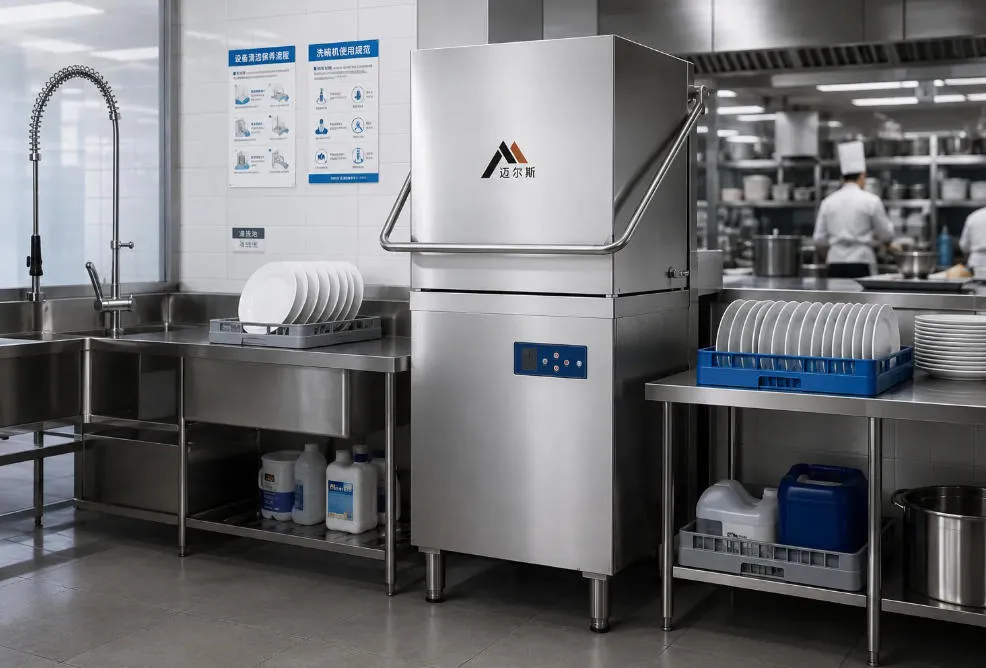
Selecting the right commercial dishwasher is a critical decision for large foodservice operations. As kitchens expand from restaurants into hotels, hospitals, universities, and central catering facilities, traditional batch washing methods may no longer meet the demands of continuous service. Choosing between Rack Conveyor Dishwashers and Flight Type Dishwashers requires a clear understanding of capacity, loading methods, workflow design, labor requirements, and future expansion needs.
Unlike smaller commercial dishwashers designed for limited-volume operations, conveyor-based systems are built around continuous washing processes. However, the best choice depends on whether a kitchen needs flexible rack handling or a highly automated large-scale washing line.
Why Choosing Between Rack Conveyor Dishwashers and Flight Type Dishwashers Matters
High-volume kitchens face constant pressure to process large quantities of plates, trays, cookware, and utensils within limited service windows. A suitable dishwashing system can directly influence labor efficiency, sanitation standards, and overall kitchen productivity.
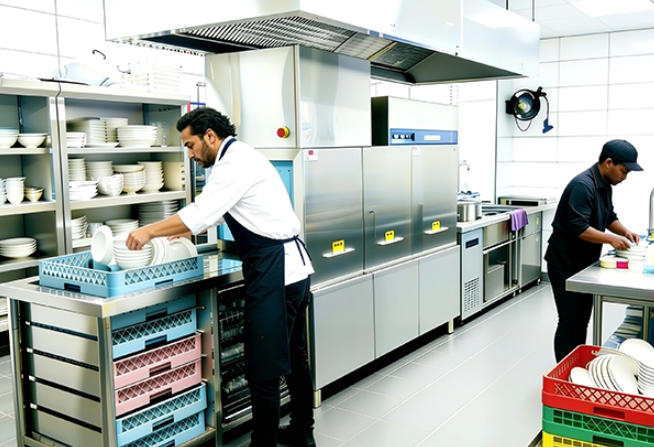
Rack Conveyor Dishwashers are commonly selected for hotels, restaurants, catering kitchens, and institutional facilities that require high output while maintaining flexibility. These systems move loaded racks through different washing stages, allowing operators to handle various types of tableware with fewer manual transfers.
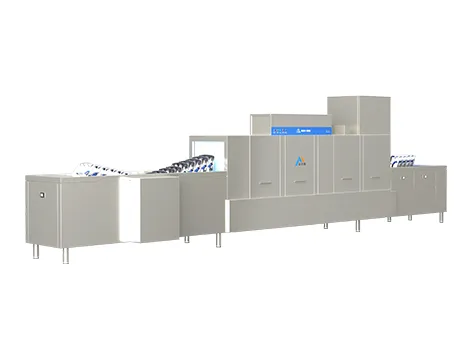
In comparison, Flight Type Dishwashers are designed for extremely high-volume environments where tableware follows a standardized and continuous path. They are often used in large institutional kitchens where thousands of meals are served daily and consistent throughput is the highest priority.
The difference between these two systems is not only about washing capacity. Equipment selection also affects kitchen layout, staff workflow, installation requirements, and long-term operating costs. Before purchasing, project planners should evaluate daily dish volume, available space, tableware variety, and expected business growth.
For example, hotels may need to handle plates, glasses, trays, and kitchen utensils from multiple dining areas, while hospitals and universities often require stable, continuous processing during concentrated meal periods. These different workflows determine whether a flexible rack-based system or a fully integrated conveyor solution is more suitable.
Rack Conveyor Dishwashers vs Flight Type Dishwashers: Loading and Workflow Differences
Although both systems are designed for high-capacity commercial washing, their loading methods and operational workflows are different. Understanding these differences helps buyers choose equipment that matches their kitchen structure.
Rack loading method: Rack Conveyor Dishwashers use standardized dish racks that can accommodate different types of tableware. This provides flexibility when kitchens handle mixed loads, including plates, bowls, cups, and serving items. Flight Type Dishwashers use a continuous flight conveyor system, which is more suitable for large quantities of similar tableware moving through a fixed process.
Conveyor operation principle: Rack conveyor systems transport individual racks through washing, rinsing, and drying stages. This allows operators to organize tableware before loading. Flight conveyor systems create a continuous production line where items move directly through the machine, improving automation for large-scale operations.
Tableware flexibility: Kitchens with changing menus or different service formats often benefit from the adaptability of rack systems. Flight systems perform best when tableware types and loading patterns remain consistent.
Labor involvement: Both systems reduce manual washing labor, but the level of automation depends on the kitchen design. Flight systems typically require a more integrated workflow, while rack systems allow easier adjustment for different operating conditions.
Kitchen layout requirements: Rack conveyor equipment generally requires a more flexible installation approach, while flight systems need larger dedicated spaces with carefully planned loading and unloading zones.
Maintenance accessibility: Modular rack systems can provide easier access for daily operation adjustments, while flight systems require more structured maintenance planning because they are part of a larger automated line.
For kitchens that need a balance between productivity and flexibility, Rack Conveyor Dishwashers can provide an efficient solution. For extremely large-scale operations requiring continuous standardized processing, Flight Type Dishwasher may offer stronger automation advantages.
Rack Conveyor vs Flight Type Dishwasher Comparison Table
| Feature | Rack Conveyor Dishwashers | Flight Type Dishwashers |
|---|
| Loading Method | Dish racks | Continuous flight conveyor |
| Best Application | Hotels, restaurants, catering kitchens | Central kitchens, hospitals, large institutions |
| Capacity Level | High | Very High |
| Tableware Flexibility | Excellent | More suitable for standardized loads |
| Layout Requirement | Medium footprint | Larger integrated system |
| Labor Requirement | Reduced | Highly automated |
| Expansion Capability | Flexible | Designed for large-scale operations |
This comparison helps commercial kitchen planners quickly identify which system fits their operational requirements. Kitchens with diverse tableware needs and changing service patterns often prefer rack-based solutions, while facilities focused on maximum continuous output may consider flight conveyor systems.
When Should You Choose a Rack Conveyor Dishwasher Instead of Other Solutions?
A Rack Conveyor Dishwasher is often the right choice for medium- to high-volume kitchens that need efficient washing performance without committing to a fully automated large-scale system.
Hotels, catering facilities, and restaurants frequently require a solution that can process large amounts of tableware while still allowing operators to manage different rack configurations. In these situations, rack conveyor systems provide a practical balance between capacity, flexibility, and installation space.
Compared with smaller batch machines, Rack Conveyor Dishwashers significantly improve workflow efficiency by reducing repeated manual loading and unloading. They are also suitable for kitchens upgrading from traditional washing processes or replacing equipment that cannot support increasing meal volumes.
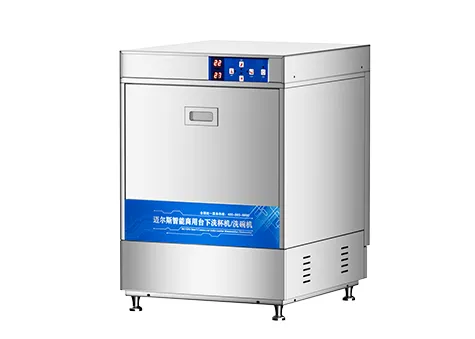
For smaller operations, a Hood Type Dishwasher may still be a suitable choice because it requires less space and offers lower initial investment. However, hood-type machines are generally designed for batch washing and may not be ideal for kitchens that require continuous high-volume processing throughout the day.
When planning a commercial dishwashing system, buyers should consider not only current demand but also future expansion. Selecting equipment with appropriate capacity can help avoid frequent upgrades as kitchen operations grow.
How MAYERS Helps Design High-Capacity Commercial Dishwashing Solutions
Choosing a commercial dishwasher is not only about selecting a machine model. A complete warewashing solution should match the kitchen layout, daily workflow, sanitation requirements, and future development plans.
MAYERS provides commercial dishwashing equipment designed for different foodservice environments, including rack conveyor systems, Flight Type Dishwashers, Hood Type Dishwasher solutions, and supporting kitchen equipment.
Key advantages include:
Customized dishwasher configurations for different kitchen capacities and operating environments.
Complete workflow planning support to help customers optimize loading, washing, and unloading processes.
OEM and ODM capabilities for different market requirements, including customized voltage and equipment configurations.
International project experience supporting hotels, institutional kitchens, catering facilities, and commercial foodservice operations.
Stable manufacturing capability with strict quality control throughout production.
Technical support after installation to help maintain long-term equipment performance.
MAYERS rack conveyor models are designed with durable 304 stainless steel construction, intelligent temperature control, and high-temperature sanitation functions to support demanding commercial applications. Models such as MES-M3 can process up to 150 baskets per hour, while MES-M4 and MES-M5 provide higher-capacity configurations depending on project requirements.
By offering different dishwasher categories and supporting equipment, MAYERS helps customers build complete warewashing systems based on kitchen size, meal volume, and operational goals rather than simply selecting the largest available machine.
Frequently Asked Questions
What is the difference between Rack Conveyor Dishwashers and Flight Type Dishwashers?
Rack conveyor models use dish racks for flexible loading, while flight systems use continuous conveyors for large standardized operations.
Which dishwasher is better for a central kitchen?
Large central kitchens often choose Flight Type Dishwashers, while rack systems are suitable when flexibility is also important.
How many baskets per hour can a Rack Conveyor Dishwasher process?
Capacity depends on the model. MAYERS rack conveyor systems can reach high-volume outputs suitable for commercial kitchens.
Are Flight Type Dishwashers suitable for hospitals and universities?
Yes. Their continuous workflow makes them suitable for large institutional foodservice operations.
When should a kitchen choose a Hood Type Dishwasher instead?
Hood-type models are better for medium-volume kitchens requiring compact installation and flexible batch washing.
How does MAYERS help customers select the right commercial dishwasher?
MAYERS evaluates kitchen layout, meal volume, workflow requirements, and equipment configuration to recommend suitable solutions.
 English
 Español
 русский