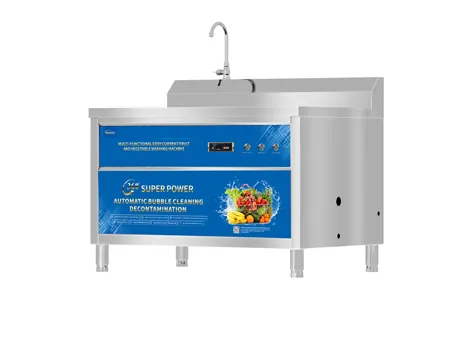
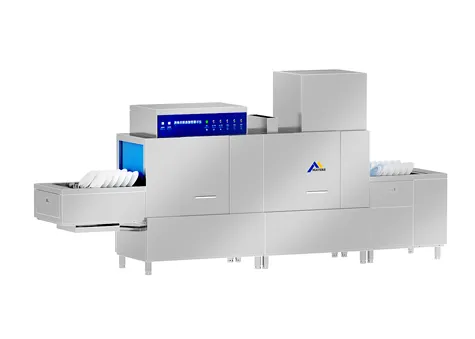
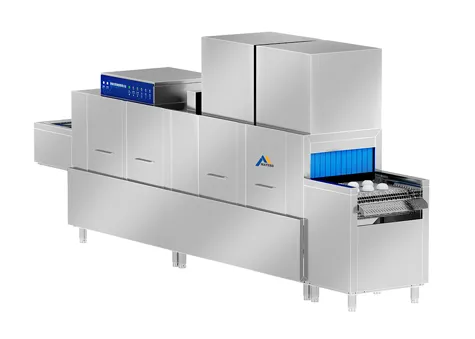
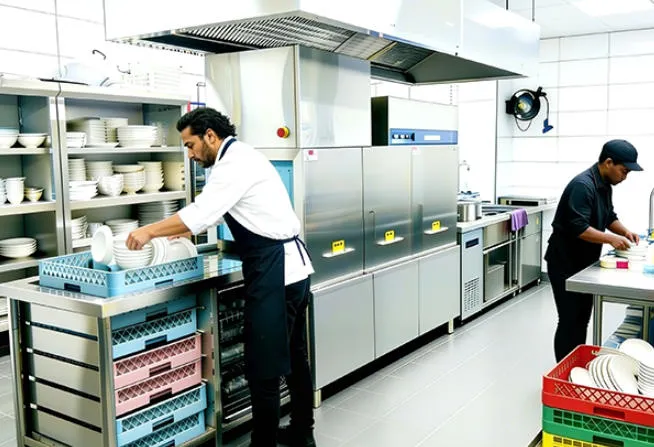
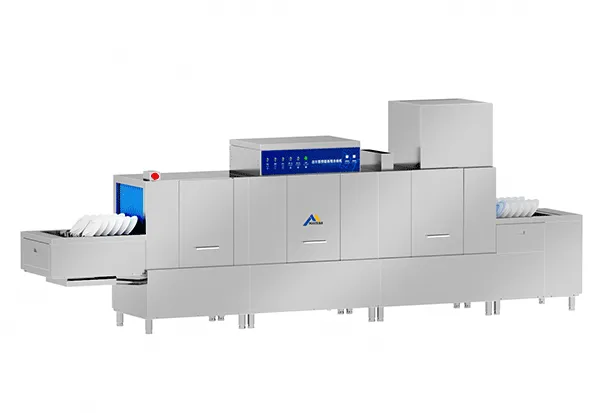
Choosing the right equipment isn't just about picking a machine off a shelf—it's about matching a solution to your specific workflow. At Mayers, we believe the "perfect" dishwasher is the one that disappears into your daily operations because it's doing its job so well you don't even have to think about it.
If you’re staring at a dozen different models and wondering which one is the right fit for your business, here is the Mayers guide to making a smart, long-term investment.
How to Choose the Right Warewashing Machine for Business
Cleaning Capacity: Matching Volume to Output
The first question we always ask at Mayers is: How many racks are you pushing per hour during your absolute busiest window?
Undercounter Units: Best for bars, coffee shops, or small cafes handling roughly 20–30 racks per hour.
Door-Type (Hood) Machines: The workhorse for mid-sized restaurants, capable of handling 50–60 racks per hour.
Conveyor Systems: If you’re running a high-volume cafeteria or a large banquet hall, you’ll need a conveyor that can process 200+ racks per hour without breaking a sweat.
Buying a machine with too little capacity leads to backups and stressed staff; buying too much is a waste of floor space and utility costs.
Water Usage: Efficiency and the Bottom Line
Modern warewashing is as much about conservation as it is about cleaning. A dishwasher for business that uses excessive water isn't just bad for the environment; it’s expensive to run because you’re paying to heat every single gallon.
Gallons Per Rack: Look for machines that optimize water consumption. Many of our high-efficiency models use less than 1 gallon per rack.
Energy Star Certification: At Mayers, we recommend looking for Energy Star-rated units. These can significantly lower your monthly utility bills by reducing both water and electricity consumption.
Space Availability: The Logistics of the Pit
Before you fall in love with a high-capacity conveyor, you need to pull out the measuring tape. Your dish pit layout dictates your machine choice.
The Footprint: Does the machine require a specialized hood or ventilation?
Workflow Direction: For larger machines, do you need a "Left-to-Right" or "Right-to-Left" configuration?
Height Clearance: Especially for undercounter units, ensure your existing cabinetry has the clearance for both the machine and the plumbing hookups.
Specific Needs of the Kitchen
Every kitchen has a "specialty" item that is a pain to wash. Your machine should be chosen based on what you actually cook.
Glassware vs. Greasy Pots: If you run a wine bar, you need a machine with a soft-start feature to prevent breakage. If you're a BBQ joint, you need a heavy-duty cycle with serious water pressure to strip away grease.
Sanitation Requirements: Depending on your local health codes, you’ll need to decide between a High-Temp machine (using heat to sanitize) or a Low-Temp machine (using chemicals).
 English
 Español
 русский